A Teacher’s Reflection on Re-assemble Conference 2025
The 2025 Re-assemble Art Education Conference: Innovation, Inclusivity, and Technology
The 2025 Re-assemble Art Education Conference, Art Education Victoria’s first regional conference, was a dynamic one-day event focused on the vital intersection of inclusivity, technology, and creativity in the visual arts classroom. Hosted in partnership with Federation University and the Ballarat International Foto Biennale (BIFB), the conference empowered educators to reimagine how technology can coexist with traditional art-making to support engaging, equitable, and future-focused visual arts learning.
The key themes explored were:
- Inclusive Innovation: Strategies to use both traditional and digital tools to empower students of all abilities and ensure equitable access to creative expression.
- Ethics of Technology Use in Art Education: Critical discussions around the ethical considerations of using Artificial Intelligence (AI) and emerging technologies, including issues of privacy, academic integrity, and responsible practice.
- Creative and Critical Digital Literacy: Building confidence in blending digital tools with hands-on art-making and discovering practical classroom strategies.
The conference featured workshops and a keynote presentation by artist Kate Just, who explored “The Power of Craft in a Digital Age,” illustrating how she has harnessed craft media, community workshops, and social media for activism.

Honoring a Legacy: The Max Darby Bursary Fund
The opportunity to attend the conference was made possible for many educators through the Max Darby Bursary Fund. This fund honors the enduring legacy of the late Dr. Max Darby, an esteemed Arts Education Consultant, Artist in Residence, Workshop Leader, Senior Art Teacher, and Life Member of Art Education Victoria, who passed away in June 2022. Dr. Darby was passionate about the importance of the arts in education and played a leading role in developing the Visual Art Curriculum in Victorian Secondary Schools. His profound impact on the realm of art education continues through initiatives like this bursary, which supports teachers in their professional development. The bursary reflects his commitment to the profession and his belief in supporting teachers, particularly those in regional areas, an area where he provided support and constructive advice to teachers and students.
Interview: A Teacher’s Transformation
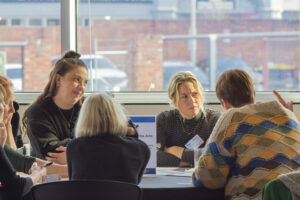
Left: Isabella
Visual and Media Arts teacher Isabella, from a regional community, shares how the conference transformed her practice and mindset, particularly on bridging the resource gap and embracing new technology.
1. In what ways did receiving the Max Darby Bursary Fund enable your attendance and participation at the 2025 Re-assemble Conference?
Being in a rural community, which is a lengthy distance away from any city, can feel isolating as it is, but not necessarily having the connections needed for consistent, improved practice and awareness of what is happening in your field can make you feel quite behind. Coming across the Max Darby Bursary Fund to attend my first education-based conference seemed like the perfect way to start changing this dynamic within my own school, but also for government schools around my area. Being a relatively new teacher within the Visual and Media Arts area in my school, I feel that it is important to complete Professional Development and go through the challenge of advocating for the current age of learners and what is relevant for them.
Applying for and receiving the Max Darby Bursary was an honour; something that I have never had the opportunity to be a part of before. This gave me the opportunity to stay in Ballarat – a full 5 ½ hour drive from Mildura, and be a part of the conference in multiple ways. Collaborating with those that are in a similar and different position to myself, helped me to understand the different perspectives of others, especially those closer to the city.
2. What were the three most valuable insights, strategies, or ideas you gained from attending the conference that will benefit your teaching practice?
The three most valuable insights I took away from the regional arts education conference were quite eye-opening for me as both a teacher and an advocate for the arts.
Firstly, the session on AI gave me a clearer picture of how I might use these tools with students—not as a replacement for their own art making, but as a way to spark ideas and open up new possibilities. I came away feeling more confident about helping students question where creativity really sits when technology is involved, and how they can use AI critically rather than passively.
Secondly, the conversations about the differences between city and rural schools really struck me. It made me reflect on how uneven access to resources and opportunities really is, and how important it is to think creatively about bridging those gaps by exposing myself to as much information as possible. I feel more motivated to use digital tools and networks to connect students with experiences they might otherwise miss out on, whether that’s through virtual gallery tours or sharing projects with people that I have met at this conference and closer to home. I was able to also talk to others primarily from the city, that did not understand that distance does limit the opportunities that our students have within Mildura, let alone the socioeconomic and background disadvantages of the students.
Finally, hearing about Kate Just’s practice reminded me of the power of art to tell stories and bring people together. It really reinforced my belief that art education should give students a chance to respond to real issues that matter to them, and to see their creative work as something that can contribute to their community. This made me feel more inspired about my own practice as well; not just as an educator but as an artist and designer myself.
Overall, the conference has left me with both practical strategies and a renewed sense of purpose around why teaching the arts matters.
3. How did you implement (or plan to implement) what you learned at the conference with your students, colleagues, or school community? Please provide specific examples.
At the regional arts education conference, I was particularly inspired by the discussions around the creative use of AI in the classroom and the keynote presentation from artist Kate Just. I plan to implement what I learned in several ways.
With my students, I want to explore AI tools as part of the design process, not as a shortcut, but as a means of generating inspiration and refining visual ideas. For example, students can use AI image generators alongside their manual drawing and design skills to compare processes, critically evaluate outcomes, and reflect on how technology can extend their creativity.
With colleagues, I intend to share practical strategies for integrating AI responsibly, particularly around fostering critical discussions about authorship, originality, and ethics in art and design. These conversations will also help us develop consistent approaches to AI use across subject areas when taken to higher up meetings.
Finally, Kate Just’s reflections on socially engaged art and the role of storytelling have motivated me to design a unit where students respond to social issues through both traditional and digital media. This connects directly to her practice of amplifying voices and building communities through art. By embedding these insights into classroom projects, I hope to encourage students to see art not only as personal expression but also as a tool for dialogue and change within their school and wider community.
Conclusion: A Renewed Sense of Purpose
Attending the re-assemble conference, supported by the Max Darby Bursary Fund, has provided more than just practical strategies; it has delivered a renewed sense of purpose around why teaching the arts truly matters. For teachers in regional and remote areas, this kind of focused professional development is vital for maintaining contemporary practice and advocating effectively for students’ needs in a rapidly evolving, technologically rich world. The insights gained—from critically incorporating AI to mobilizing art for social change—will be instrumental in helping students not just make art, but to see themselves as active, informed, and creative contributors to their community.
MOST RECENT ARTicles :
Teaching Art is Easy
MAX DARBY
Sadly, for many of us, some people seem to think teaching a...
Learn more 
Mornington Island Enterprise Art Project
BEN LANDERS
As a non-Indigenous art teacher with experience working in re...
Learn more
Robbie Rowlands
STUART KOOP
Seeing a body with holes, the incision so precise, the remova...
Learn more